-
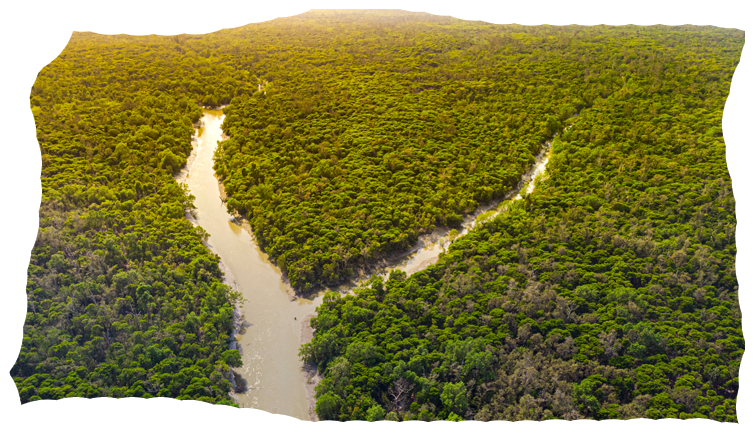
Forests play a crucial role as a reservoir of Biodiversity. Ancient and frontier forests, which have experienced minimal human disturbance over a long period of time, tend to have higher levels of Biodiversity compared to other natural or semi-natural forests. The significance of forests in conserving Biodiversity is evident in the analysis of Biodiversity Hotspots. When forests are lost, there is a direct impact on habitat loss, leading to a reduction in Biodiversity. Preserving Biodiversity is important for various reasons, including its direct use value and option value, but the focus here is on the indirect use value in the form of ecosystem services. A decline in Biodiversity can disrupt the stability of ecosystems, making them more vulnerable to disturbances in the food web, species invasion, and global environmental changes.
-
The accelerated loss of Coastal and Marine Biodiversity in recent decades is a major concern. Factors such as environmental changes, overexploitation, and habitat loss have contributed to the loss of species, estimated to be at a rate of one species per day. It is equally important to predict the future composition of marine life, especially in regions where habitat loss and declining water quality are significantly impacting species diversity.
-
Marine environments are renowned for providing valuable resources, including food and economic opportunities. However, the exploitation of these resources is now threatened by increased commercial activities and subsistence living. The decline in Marine Biodiversity can be attributed to various factors such as overharvesting, pollution, habitat loss, introduction of non-native species, and global climatic change. It is crucial for individuals at all levels in the society to prioritize conservation of Marine Biodiversity to secure a more sustainable future for generations to come.
-
In a survey conducted by New York's American Museums of the Natural History in 1998, 400 biologists from around the world concluded that up to 20 percent of all living populations could face extinction within the next 30 years. This alarming prediction is based on various factors such as genetic pollution, habitat degradation, predation, competition, diseases, global warming, and human interference. Biologist E.O. Wilson further estimated in 2002 that if the current rates of human destruction of the biosphere persist, half of all species on Earth will be extinct within a century. What is even more concerning is that the current rate of species extinctions is estimated to be 100 to 1000 times higher than the 'background' or average extinction rates observed throughout the evolutionary history of our planet.